
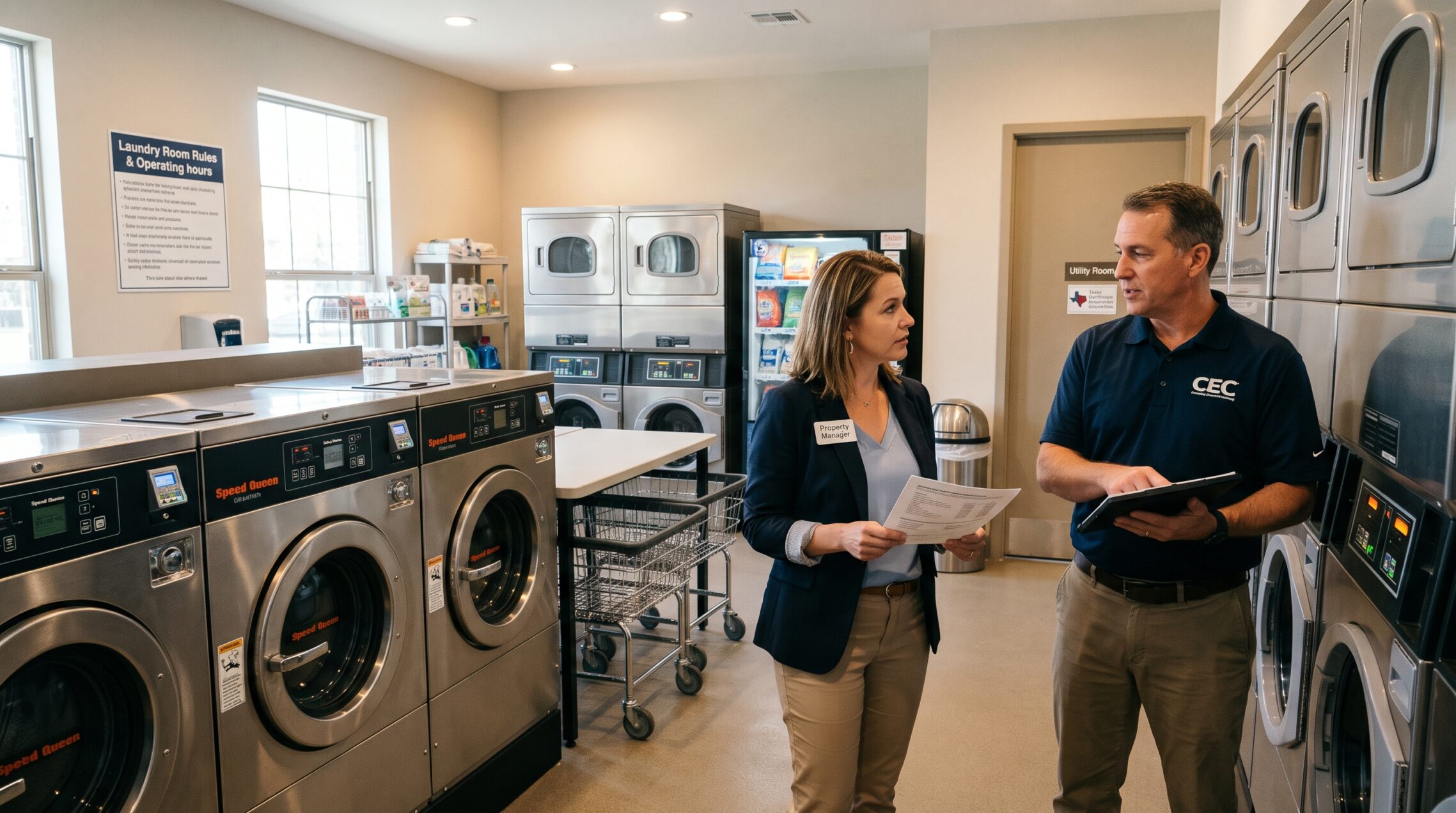
Every property manager eventually faces this question. Your washers and dryers are aging out, or a new community is coming online, and you need a laundry plan. Laundry isn’t a side amenity. It affects resident satisfaction, lease renewals, and monthly ancillary income.
Commercial Equipment Company (CEC) works with Texas property managers on this exact decision every week. Neither leasing nor buying is universally better. The right choice depends on your budget, your property size, your ownership goals, and how much hands-on management your team wants to take on.
Here’s the short answer. Buying laundry equipment usually delivers the lowest long-term cost and full control of revenue. Leasing lowers upfront costs and shifts some maintenance responsibility off your team. Let’s break down the options and what best fits your property.
Why the Lease vs. Buy Decision Matters for Texas Multi-Family Properties
Residents expect a working laundry room the same way they expect working air conditioning. When it’s reliable, nobody notices. When it isn’t, your office hears about it constantly. Laundry rooms also generate ancillary revenue, which matters to your bottom line regardless of how you acquire the property.
Texas adds its own wrinkles. Dallas-Fort Worth, Houston, Austin, and San Antonio are all seeing rapid multi-family growth, and new communities need laundry infrastructure from day one. Texas heat and humidity put extra strain on equipment rooms, especially where ventilation wasn’t planned correctly. High resident turnover in some markets means your laundry setup must perform consistently as tenant populations change.
Choosing poorly carries real costs. Downtime drives complaints and bad reviews. A locked-in contract with the wrong terms can follow you for years, even after you’ve realized it doesn’t fit your property.
How Leasing Laundry Equipment Works
A laundry lease typically covers the equipment, installation, and, in many cases, ongoing service. Terms vary by provider, but most leases run three to seven years, with monthly payments built around the equipment cost and sometimes a maintenance package.
Lease structures differ in one important way: who owns the machines at the end of the term. Some leases include a buyout option. Others simply end, with the equipment returned or replaced. It’s worth reading that section of any contract closely before signing.
Advantages of Leasing
Leasing removes the need for a large upfront capital outlay. That matters for properties managing tight budgets or multiple capital projects at once. Monthly costs stay predictable, which makes planning easier across a full fiscal year.
Many lease agreements bundle service and repairs into the monthly cost. That shifts maintenance responsibility away from your onsite team. Leasing also makes equipment refreshes simpler. When the term ends, you can often upgrade to newer machines without the hassle of reselling old equipment.
Disadvantages of Leasing
Leasing isn’t free of trade-offs. Over the full life of the equipment, total lease payments usually add up to more than a straight purchase would have cost. You build no equity in the machines themselves, even after years of payments.
Contract terms can also create complications. If you sell the property before the lease term ends, transferring or exiting that contract isn’t always simple. It’s worth asking about early termination and property-sale clauses before you sign.
How Buying Laundry Equipment Works
Buying means purchasing the equipment outright, either with cash or through financing. You own the machines from day one, which brings both benefits and responsibilities.
Ownership opens up depreciation and other potential tax considerations, though you should consult a tax professional for guidance specific to your property and entity structure. Commercial units built for multi-family use, including Speed Queen machines, are designed for long service life under heavy daily cycles, often outperforming consumer-grade equipment by years.
Advantages of Buying
Buying typically delivers the lowest total cost of ownership over the equipment’s full lifespan. You also keep full control of vendor pricing and laundry revenue. Nobody else takes a cut.
Ownership gives you freedom to choose your payment systems, whether that’s coin, card, or app-based. You’re not locked into whatever a lease provider offers. Owned equipment also adds tangible value to the property itself, which can matter at resale or refinancing.
Disadvantages of Buying
The upfront investment is real, and it can strain capital budgets, especially for larger properties needing multiple units. Unless you pair ownership with a dedicated service plan, your team takes on full responsibility for maintenance and repairs. That requires either in-house expertise or a reliable local vendor relationship.
Key Questions to Ask Before You Decide
Start with your hold period. How long do you plan to own this property? Then look at your current budget cycle and how much capital is realistically available this year.
Consider your team’s bandwidth too. Does your maintenance staff have the capacity to manage laundry service calls, or would that pull them away from other priorities? Think about how much you value controlling laundry revenue directly, and whether you’re planning a move to card or mobile payment systems in the near future. Each answer points you toward one option or the other.
Why Equipment Quality Matters Either Way
Whichever path you choose, equipment quality drives the outcome. Durability and uptime affect resident satisfaction no matter how you acquired the machines. A leased washer that breaks down weekly causes the same frustration as an owned one.
Speed Queen has built its reputation in the multi-family industry on commercial-grade reliability paired with current payment and monitoring technology. Equipment that breaks down less often simply costs less to operate over time, regardless of whether you’re leasing or buying it.
How CEC Helps Texas Property Managers Choose the Right Option
CEC has equipped multi-family laundry centers across Texas for over fifty years. We’re the only remaining family-owned and operated laundry equipment provider in the state, now run by the third generation of the same family.
Headquartered in Farmers Branch, we partner directly with Speed Queen to bring high-performance washers and dryers to properties across DFW and beyond. What sets us apart isn’t just the equipment. It’s the service behind it. Our team shows up promptly and treats every property with the same conscientious care, whether you choose to lease or buy.
Frequently Asked Questions
Is it cheaper to lease or buy commercial laundry equipment?
Buying is usually cheaper over the full life of the equipment. Leasing costs less upfront but adds up to more over several years. The better deal depends on how long you plan to hold the property.
How long does commercial laundry equipment last in an apartment community?
Commercial-grade machines like Speed Queen units typically last 10 to 15 years under heavy multi-family use. Lifespan depends on usage volume, maintenance, and how well the room is ventilated.
Who is responsible for repairs on leased laundry equipment?
Most lease agreements include service and repairs as part of the monthly cost. Always confirm what’s covered in your specific contract before signing.
Can I keep the laundry revenue if I lease equipment?
It depends on the lease structure. Some leases allow you to keep full vendor revenue. Others operate on a revenue-share model where the provider takes a percentage.
What happens to a laundry equipment lease if I sell the property?
This varies by contract. Some leases transfer to the new owner. Others require early termination fees or a buyout before the sale closes. Review this clause carefully before signing any lease.
Are there tax benefits to buying laundry equipment?
Purchased equipment can often be depreciated, which may offer tax advantages. Consult a tax professional to understand what applies to your specific property and entity structure.
What laundry equipment brand is best for multi-family properties?
Speed Queen is widely regarded as a top choice for multi-family laundry rooms. The brand is built specifically for high-cycle commercial use, not adapted from residential models.
How do I know when it’s time to replace my property’s washers and dryers?
Frequent breakdowns, rising repair costs, and resident complaints are the clearest signs. If service calls are becoming routine instead of rare, it’s time to start exploring replacement.
Find the Right Fit for Your Laundry Room With CEC
Every property is different, and the lease-versus-buy decision shouldn’t be guesswork. CEC has spent over fifty years helping Texas property managers make this call with confidence. Reach out to us to get a quote and talk through your options. We’ll walk your property, review your numbers, and help you land on the approach that actually fits.