
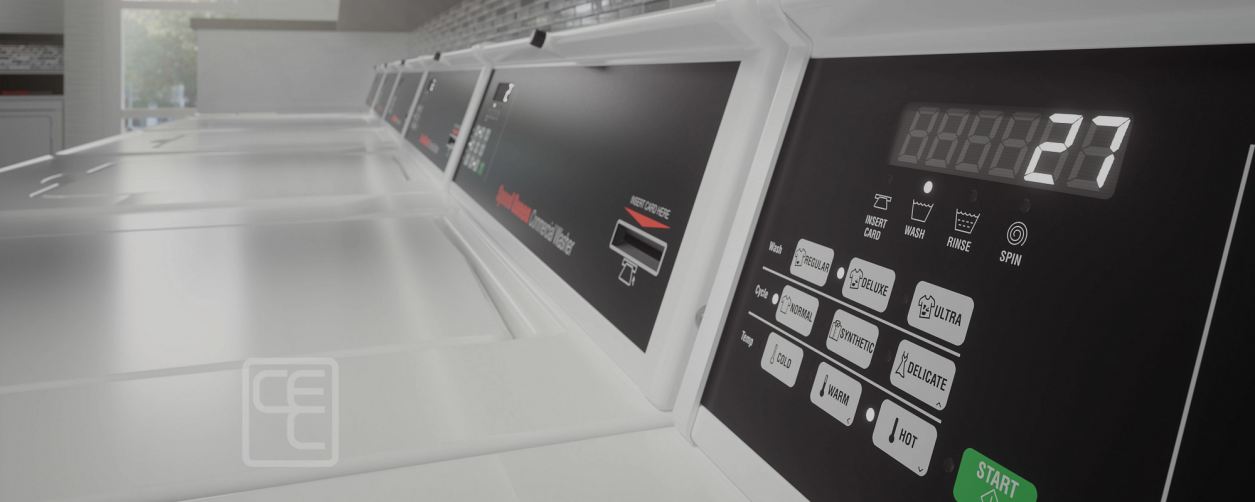
Utility costs are one of the largest ongoing expenses for multi-family properties, and the laundry room is often a bigger contributor than property owners realize. Older washers and dryers can use far more water, gas, and electricity than necessary, quietly driving up operating costs month after month. Upgrading to energy-efficient commercial laundry equipment is one of the more straightforward ways property owners can reduce expenses without cutting corners on resident experience.
Here is what property owners and managers should understand about the long-term savings that come with energy-efficient laundry equipment, and how to evaluate whether an upgrade makes financial sense for their property.
Why Older Laundry Equipment Costs More to Run
Commercial washers and dryers manufactured a decade or more ago were built to older efficiency standards, using more water per cycle and requiring more energy to heat that water and power the drying process. As equipment ages, mechanical wear can compound the problem, with worn seals, inefficient motors, and heating elements that no longer perform at their original capacity. The result is a laundry room that consumes significantly more resources than a comparably sized room with modern machines.
Where the Savings Actually Come From
Energy-efficient commercial washers reduce water usage per load through improved drum design and more precise fill controls. Efficient dryers use better heat management and airflow to shorten drying times without sacrificing performance. Together, these improvements lower both the water bill and the gas or electric bill tied to the laundry room, and the savings apply to every single cycle run on the property, which adds up quickly in a high-traffic multi-family setting.
Calculating the Return on Investment
Property owners evaluating an equipment upgrade should look at more than the upfront purchase price. A useful comparison includes current utility costs tied to the laundry room, the number of cycles run per month, and the expected reduction in water and energy usage with newer equipment. In many cases, the combination of lower utility bills, reduced repair costs, and increased laundry room revenue from more reliable machines allows the equipment to pay for itself well within its expected lifespan.
Efficiency Benefits Extend Beyond the Utility Bill
Energy-efficient machines often run shorter cycles, which means more availability for residents during peak laundry hours without adding additional units. Many newer models are also quieter and gentler on fabric, which residents notice and appreciate. For property owners marketing amenities to prospective renters, an updated, efficient laundry room can be a meaningful selling point, particularly for residents who are conscious of sustainability.
Choosing the Right Equipment for Long-Term Efficiency
Not all commercial washers and dryers are built with the same efficiency standards, so the manufacturer and model matter. CEC partners exclusively with Speed Queen to provide Texas multi-family properties with high-performance washers and dryers built on the latest technology. As the only family-owned and operated laundry equipment provider in Texas, with more than fifty years of experience serving the property management industry, CEC helps owners select equipment sized and specified correctly for their property’s usage patterns, rather than a one-size-fits-all solution.
Frequently Asked Questions
How much can energy-efficient laundry equipment actually save a property?
Savings vary based on the age of the existing equipment and usage volume, but properties commonly see a meaningful reduction in water and energy costs after upgrading, since older machines often use significantly more resources per cycle than current models.
How long does it take for new laundry equipment to pay for itself?
Many properties see a return on investment within a few years, once combined utility savings, reduced repair costs, and improved laundry room revenue are factored in. The exact timeline depends on cycle volume and the condition of the equipment being replaced.
Are energy-efficient washers and dryers harder on clothes or slower to operate?
No. Modern energy-efficient machines are generally designed to run shorter, gentler cycles compared to older equipment, improving both fabric care and resident turnaround time.
Do energy-efficient machines require different plumbing or electrical setups?
In most cases, updated equipment can be installed using existing connections, though a provider should always assess the property’s specific setup before installation to confirm compatibility.
Does upgrading laundry equipment help with sustainability goals?
Yes. Reduced water and energy consumption per cycle contributes directly to a property’s overall sustainability profile, which can also be a point of interest for environmentally conscious residents.
Who can help evaluate whether my property’s laundry equipment needs an efficiency upgrade?
A laundry equipment provider with experience serving multi-family properties, such as CEC, can assess current usage and equipment condition to recommend whether an upgrade is worthwhile and which machines fit the property’s needs.